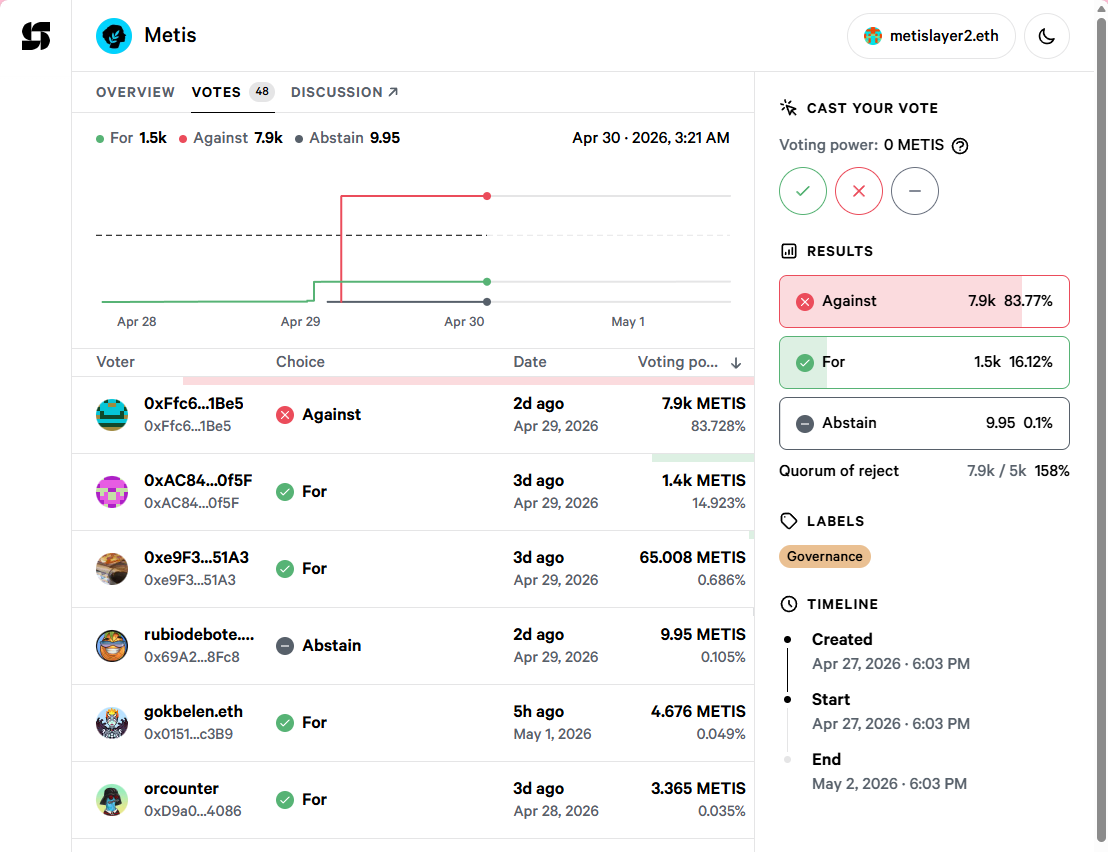
Update: Vote outcome and next steps
The vote closes May 2nd. With 7,900 METIS currently voting AGAINST - exceeding the 5,000 METIS Optimistic Quorum threshold - the outcome is already determined: this proposal does not pass.
So far, 41 of 48 wallets have voted in favour; 1 abstained. One wallet holding 7,900 METIS voted against, with no comment on this forum before or after the vote.
This was anticipated
When the Optimistic Quorum was introduced in March 2025, the community flagged this specific risk. cypherpunk669 wrote:
“One individual who holds more than 5,000 METIS can block any vote, or a small group of 2-3 people who have a combined 5,000 METIS can block any proposal and continuously disrupt governance for selfish reasons.”
That concern materialized here. It is also worth noting the irony:
The proposal that was blocked is one designed to increase governance accountability and transparency. The mechanism used to block it - silent rejection with no explanation - is precisely the pattern the proposal was trying to address.
What the framework already provides
The Optimistic Quorum rules include a built-in revote path for exactly this situation. A failed vote is eligible for a second and final revote using quadratic voting - a method that distributes influence more evenly across wallets rather than concentrating it in large token holders - with a Simple Quorum of 5,000 METIS and 400 participating wallets.
We are evaluating whether to use this path. Before doing so, we want to understand the objection.
A direct question
To whoever cast the 7,900 METIS AGAINST vote, and to anyone who has reservations about this proposal:
The proposal covered three distinct things:
- The Meaningful Vote Standard - defining when community votes are required
- The Leadership Decision Registry - mandatory public documentation of leadership decisions with a community challenge mechanism
- Declared intent to build native on-chain governance on Metis L2
Which of these do you object to, and why?
This forum thread is the place for that conversation. A silent rejection tells us nothing about what needs to change. A posted objection gives us something to work with.
We are listening. We will incorporate substantive feedback before deciding on next steps.
Andrei Sinelnikov, Governance Lead, Metis Foundation